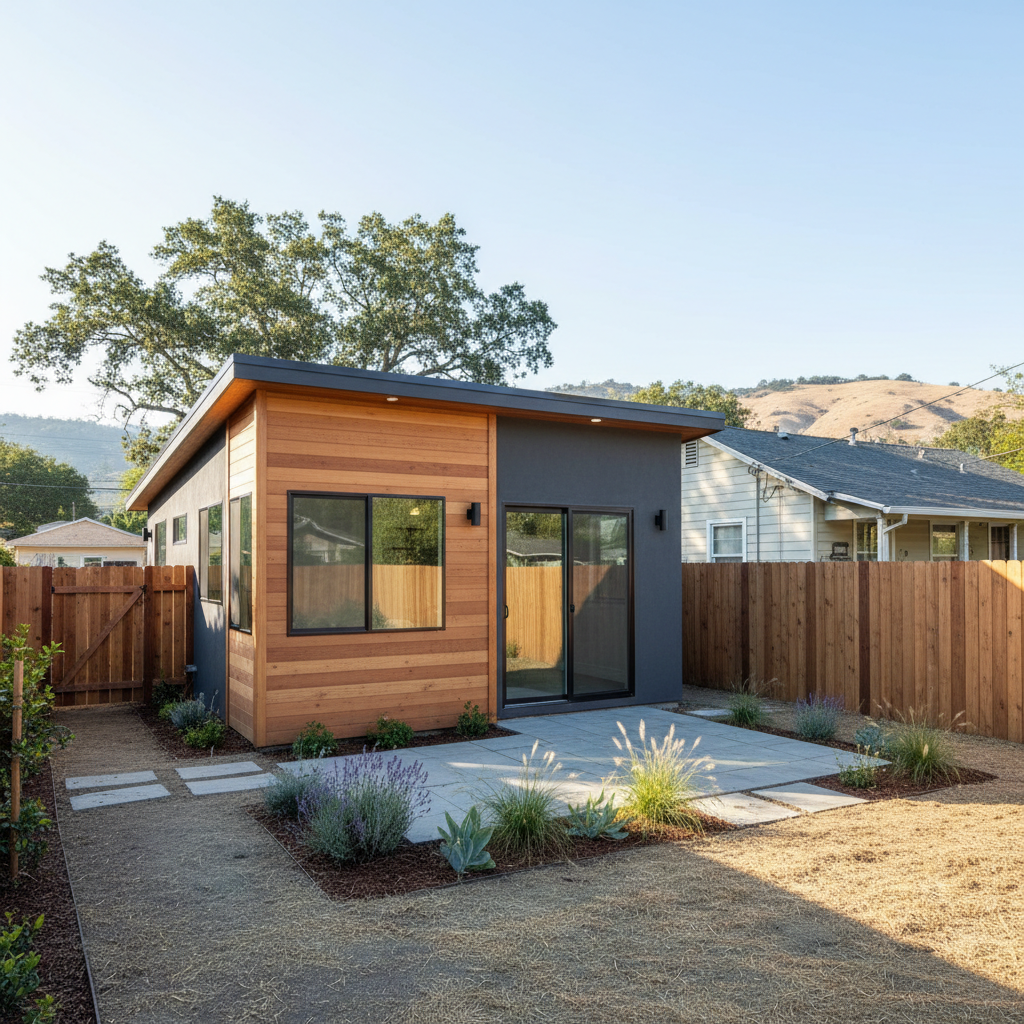
Alright, let's just get right to it. You're thinking about adding a Junior ADU (JADU) to your place here in Santa Rosa, and naturally, the big question on your mind is, "What's this going to cost?" That's a totally fair question, and frankly, a lot of folks in this business tend to dodge it. I'm not going to do that. Instead, I'll give you the real scoop, based on what I've seen from projects right here in Sonoma County.
So, What Exactly Is a JADU, Anyway?
Before we start talking money, let's just do a quick refresh. A JADU isn't a full-blown ADU. It's a smaller unit, always built inside your main home's existing footprint, usually by turning a garage or part of the house into living space. It has to be under 500 square feet, include an efficiency kitchen, and have its own entrance. Here's the big difference: you don't actually *have* to add a separate bathroom if your main house already has one that the JADU can easily access. That alone can save you a good chunk of change.
What Makes JADU Costs Go Up (or Down)?
A few key things really drive JADU pricing. It's not just about how many square feet you're building; it's also about what you're starting with and what you hope to achieve.
How Good Is Your Existing Space? This is huge. Turning a garage that already has decent electrical and plumbing nearby is way cheaper than carving out space from a finished living area that needs a total gut job. If your walls are old and uninsulated, or if the concrete slab needs leveling, those costs are going to add up.
Kitchen & Bathroom Details: Even an "efficiency kitchen" can look wildly different depending on what you want. Are we talking a mini-fridge, microwave, and a hot plate? Or do you envision a proper sink, a two-burner cooktop, and a small oven? And if you *do* decide to add a new bathroom, that's a big-ticket item right there, especially if we need to punch through a concrete slab for new plumbing lines.
Finishes: This is where your personal style really comes into play. Laminate flooring versus engineered hardwood? Basic IKEA cabinets versus custom shaker style? A standard drywall finish versus, say, Venetian plaster? You get the picture. Most people usually go for mid-range finishes, which hit a nice sweet spot between durability and cost.
Structural Changes: Are we moving load-bearing walls? Adding new windows or doors to the outside of the house? These aren't just cosmetic tweaks; they involve engineering and more complex construction work.
Site-Specific Challenges: Sometimes, we just run into surprises. Maybe the existing electrical panel isn't up to code for the new load, or we find some dry rot in a wall once we open it up. These unexpected issues, while not super common, can definitely impact the final bill.
Typical JADU Cost Ranges in Santa Rosa
Alright, the numbers you've been waiting for. For a JADU here in Santa Rosa, you're generally looking at a range of $75,000 to $175,000. I know that's a pretty wide spread, but remember all those factors I just mentioned? They really do matter.
Basic Conversion (Garage, minimal changes): If you're converting a garage that's already in decent shape, has good access to utilities, and you're going with standard, durable finishes, you could be in the $75,000 - $110,000 range. This is for a truly efficient setup, probably without a brand new bathroom.
Mid-Range Conversion (More involved, good finishes): This is where most people end up. You might be converting a section of your house, adding a new exterior door, upgrading some electrical, and putting in solid, attractive finishes. If you're adding a small, new bathroom, this is likely your price point. Expect $110,000 - $150,000.
High-End Conversion (Extensive changes, premium finishes): If you're really transforming a space — perhaps moving walls, adding multiple new openings, and choosing higher-end fixtures and materials — you're looking at $150,000 - $175,000+. This would also apply if you hit some unforeseen structural or utility challenges, which happens sometimes.
These numbers cover everything from design and permits right through to construction and finishes. They're based on projects we've done and seen all over Santa Rosa, from the older homes in Montgomery Village to the newer developments on the west side.
What Should a Good Quote Include?
When you get a quote from a contractor, don't just stare at the bottom line. A good, transparent quote should break down the costs so you know exactly what you're paying for. Here's what I always make sure to include:
Permit Fees: These aren't always cheap, and they vary by city. Make sure they're accounted for.
Design & Engineering: Architectural plans, structural engineering if needed, energy calculations. All necessary for permits, of course.
Demolition: If we're tearing out old walls, flooring, or existing fixtures.
Foundation/Slab Work: Any concrete cutting, patching, or leveling.
Framing & Drywall: Building new walls, repairing existing ones, insulation, and finishing the interior surfaces.
Roofing: If you're punching through for a new skylight or making exterior changes that impact the roofline.
Plumbing: New water lines, drain lines, fixtures for the kitchen and any new bathroom.
Electrical: New circuits, outlets, lighting, panel upgrades if necessary.
HVAC: Heating and cooling for the new space. A mini-split system is often a good, efficient choice for JADUs.
Windows & Doors: New exterior doors, windows, and interior doors.
Flooring: Installation of your chosen flooring.
Cabinetry & Countertops: For the kitchen and any bathroom vanity.
Appliances: Specify if these are included or if you're supplying them.
Painting: Interior and exterior.
Project Management & Supervision: The cost of managing the whole shebang, coordinating subcontractors, and making sure it all runs smoothly.
Contingency: A good contractor will often include a small contingency (5-10%) for unforeseen issues. It's better to have it and not need it than to need it and not have it, right?
How to Avoid Overpaying for Your JADU
Nobody wants to get ripped off. Here's how you can be smart about your JADU project and get good value for your money:
Be Clear on Your Vision: The more specific you are upfront, the less guesswork there is, and the fewer change orders you'll have later. Know what you want in terms of layout, finishes, and how you want the space to function.
Get Multiple Bids: Don't just go with the first guy who comes along. Talk to at least three reputable contractors. Make sure they're all bidding on the exact same scope of work so you can compare apples to apples.
Check References & Licenses: This should be a no-brainer, but always verify. A cheap bid from an unlicensed contractor is just asking for trouble.
Understand the Plans: Before signing anything, make sure you understand the architectural drawings and exactly what's being built. Ask questions until you're completely clear.
Don't Skimp on the Essentials: Things like good insulation, proper ventilation, and solid framing aren't glamorous, but they're absolutely critical for the longevity and comfort of your JADU. Cutting corners here will cost you more in the long run.
Consider Value Engineering: A good contractor, like us at Santa Rosa ADU Solutions, can often suggest alternative materials or methods that achieve a similar look or function at a lower cost without sacrificing quality. For example, maybe a different type of flooring that's just as durable but less expensive.
Be Prepared for the Unexpected: Even with the best planning, sometimes things just pop up. An old house might have some hidden issues. Having a small buffer in your budget for these surprises can save you a lot of stress.
Building a JADU is a smart investment, and it doesn't have to break the bank. By understanding the costs and being prepared, you can get a great space that adds value and flexibility to your Santa Rosa home.